
Missing teeth affect more than just your appearance. They can make eating uncomfortable, speaking awkward, and smiling feel like something you want to hide. If you’re living with gaps in your smile, you’ve probably wondered: What’s my best option for replacing them? Two of the most common solutions are dental implants and dentures. Both can give you back a complete smile. But they work very differently, and one might fit your life much better than the other.
At Emerald Isle Smiles, Dr. Aubrey Myers offers both options for dental patients near Atlantic Beach, Newport, and Swansboro. She’ll never push you toward one without listening to your goals, your budget, and your lifestyle. But to help you start thinking about what might work for you, let’s break down the real differences.
Dental Implants: The Permanent Solution
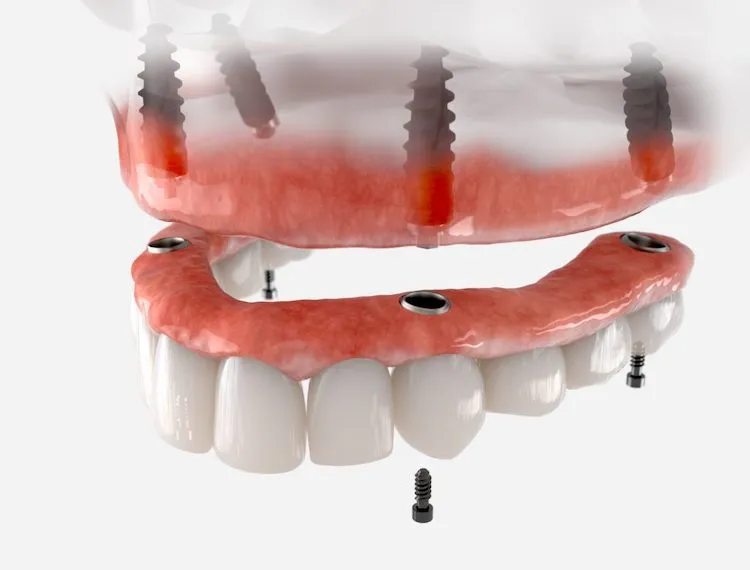
A dental implant is a small titanium post that Dr. Myers surgically places into your jawbone. Over time, that post fuses with the bone, just like a natural tooth root. Once healed, she attaches a custom-made crown on top. The result often looks, feels, and functions like the real thing.
The pros of implants:
- Permanent. With good care, implants can last a lifetime.
- Stable. They don’t slip, click, or move when you eat or talk.
- Bone-saving. Implants stimulate your jawbone, preventing the bone loss that often happens after tooth loss.
- Easy maintenance. You brush and floss them just like natural teeth. No special cleaners or overnight soaking.
The cons of implants:
- Higher upfront cost. Implants cost more initially than dentures.
- Longer process. From placement to final crown can take several months.
- Requires surgery. Not everyone is comfortable with that, though Dr. Myers makes the procedure gentle and predictable.
Dentures: The Removable Option
Dentures have been around for a long time, and for good reason: they work. Full dentures replace all the teeth on an arch. Partial dentures fill in gaps when some natural teeth remain. They rest on your gums and are held in place by suction or small metal clasps.
The pros of dentures:
- More affordable upfront. Dentures cost less than implants initially.
- No surgery required. If you prefer to avoid oral surgery, dentures are a non-invasive option.
- Faster turnaround. You can have a complete set of dentures in weeks, not months.
The cons of dentures:
- Can slip or click. Eating sticky or hard foods can be a challenge. Some people feel self-conscious about movement.
- Bone loss continues. Without tooth roots to stimulate the jaw, your bone slowly shrinks over time. That means dentures may eventually fit poorly and need relining or replacement.
- Special care required. Dentures must be removed at night and soaked in a cleaning solution. You also need to clean your gums daily.
- Diet changes. Many denture wearers avoid certain foods like apples, corn on the cob, or nuts.
So Which One Is Right for You?
It depends on your priorities. We recommend that you choose dental implants if:
- You want a permanent, worry-free solution.
- You don’t want to think about your replacement teeth slipping.
- You’re willing to invest more upfront for long-term value.
Choose dentures if:
- You need a more budget-friendly option right now.
- You prefer to avoid surgery.
- You’re okay with removable teeth and the care they require.
Many patients also choose a hybrid approach. For example, implant-supported dentures. These snap onto a few implants for stability but still come out for cleaning. Dr. Myers can explain all your options.
The Long-Term Cost Comparison
When considering dental implants vs. dentures, you want to look beyond the upfront cost.
Dentures may cost less initially. But they need to be replaced or relined every 5 to 10 years. Over time, these costs can add up. Dentures also do not prevent bone loss, which can lead to changes in your facial structure and the need for more frequent adjustments.
Implants cost more upfront. But they can last a lifetime. Over 20 or 30 years, implants often prove to be the more cost-effective option. They also preserve your bone and protect your remaining teeth.
How Implants and Dentures Affect Your Jawbone
One of the most important differences between dental implants vs. dentures is the effect on your jawbone.
When you lose a tooth, the bone underneath starts to shrink. This happens because the tooth root is no longer there to stimulate the bone. Over time, bone loss can change the shape of your face. It can make you look older.
Dentures do nothing to prevent bone loss. They sit on top of the gums and provide no stimulation to the bone. The bone continues to shrink, which can cause dentures to become loose over time.
Implants replace the tooth root. They stimulate the bone just like a natural tooth. This prevents bone loss and preserves your facial structure.
Replace Lost Teeth Today
Missing teeth don’t have to stay missing. Whether you choose implants, dentures, or something in between, the most important thing is that you take the first step. Dr. Myers has years of experience restoring smiles with both implants and dentures. She’ll examine your mouth, listen to your concerns, and help you make a decision you feel good about.
Ready to explore your options? New patients can call 252-590-5601. Current patients can call 252-354-4688. Or if you’re just curious, try a Virtual Consultation. Upload photos of your smile, and Dr. Myers will send you a personalized video with her recommendations. We’re proud to provide restorative care for patients from Atlantic Beach, Newport, and Swansboro, NC.