
Have you ever noticed a little pink in the sink when you brush your teeth? Maybe your gums look a bit red or feel tender, but you figure it’s no big deal. After all, it doesn’t really hurt. Gum disease is one of the most common dental problems in adults, and it rarely causes pain in its early stages. That’s why we call it a “silent” threat. You can have it for years without knowing it while it slowly damages the very foundation that holds your teeth in place.
Many patients who develop gum disease wonder if it’s reversible. With the right care and in the right stage, it is.
At Emerald Isle Smiles, Dr. Aubrey Myers sees gum disease in patients of all ages from Cape Carteret, Newport, Cedar Point, and Swansboro. The good news? When caught early, it’s entirely treatable and reversible. With the right care, you can protect your smile for the long haul.
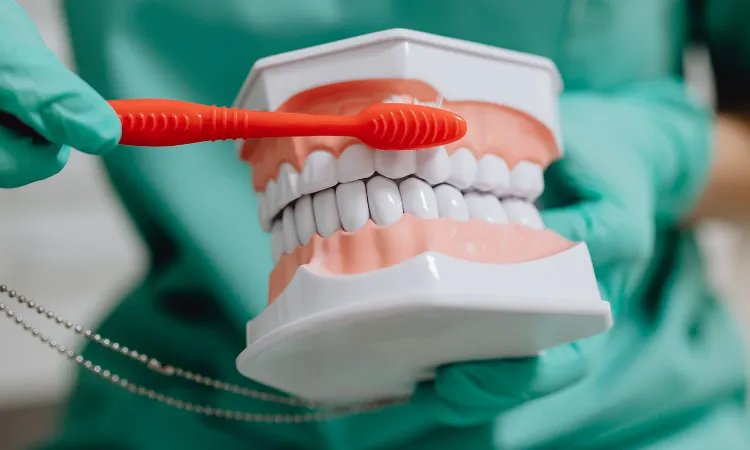
Can You Reverse Gum Disease? It Depends on the Stage
The answer to “can you reverse gum disease” depends entirely on how far it has progressed. Gum disease happens in stages. Each stage has different treatment options and different outcomes.
Stage 1: Gingivitis.
This is the early stage. The infection is only in your gums. Your gums may be red, swollen, or bleed when you brush. At this stage, the answer to “can you reverse gum disease” is yes. With a professional cleaning and better daily care, your gums can return to full health.
Stage 2: Early periodontitis.
The infection has spread below the gumline. Some bone loss has started. At this stage, you cannot fully reverse the disease. But you can stop it from getting worse. Treatment can save your teeth and protect your remaining bone.
Stage 3: Advanced periodontitis.
Significant bone loss has occurred. Teeth may feel loose. At this stage, the bone damage is permanent. But treatment can still stop the infection and prevent further loss. Early treatment is always better.
So when patients ask, “Can you reverse gum disease?” the answer is yes for gingivitis. For periodontitis, the goal is to stop the disease and protect what is left.
Red Flags You Shouldn’t Ignore
Since gum disease doesn’t always hurt, you have to look for other clues. Here are the most common signs:
- Bleeding gums when you brush or floss. This is the earliest and most reliable warning sign. Healthy gums don’t bleed.
- Persistent bad breath or a bad taste in your mouth. The bacteria causing the infection release odorous gases.
- Red, swollen, or tender gums. Inflammation is your body’s way of saying “something is wrong.”
- Gums that are pulling away from your teeth. Teeth may look longer than they did before.
- Loose teeth or a change in your bite. This is a later sign, but it’s serious.
- Pus between your teeth and gums. This is a clear sign of infection and needs immediate attention.
How to Reverse Gum Disease in the Early Stage
If you have gingivitis, reversing gum disease is straightforward. Here is what you need to do.
Step 1: Get a professional cleaning. Dr. Myers will remove the tartar that you cannot brush off at home. This gives your gums a fresh start.
Step 2: Brush twice a day. Use a soft-bristled toothbrush and fluoride toothpaste. Brush for two full minutes each time. Pay special attention to the gumline.
Step 3: Floss daily. Flossing removes plaque from between your teeth. This is where gum disease often starts.
Step 4: Use an antiseptic mouthwash. A rinse can help kill bacteria that cause gum disease.
Step 5: See Dr. Myers regularly. Regular checkups help catch problems early. If you follow these steps, your gums can heal in just a few weeks.
What Increases Your Risk?
Some people are more prone to gum disease than others. Risk factors include:
- Smoking or tobacco use: This is one of the biggest risk factors.
- Poor oral hygiene: Skipping brushing and flossing invites bacteria.
- Genetics: Some people are simply more susceptible.
- Diabetes: High blood sugar makes infections harder to fight.
- Stress: It weakens your immune system.
- Medications that reduce saliva: Saliva helps wash away bacteria.
- Hormonal changes: Pregnancy, menstruation, and menopause can make gums more sensitive.
How Dr. Myers Treats Gum Disease
If you’re diagnosed with gum disease, don’t panic. Dr. Myers offers periodontal therapy designed to stop the infection and help your gums heal.
For early to moderate cases, she typically recommends scaling and root planing. This is a deep-cleaning procedure that goes below the gumline to remove tartar and bacteria. The roots of your teeth are smoothed so your gums can reattach more firmly.
For more advanced cases, Dr. Myers may recommend additional treatments. Every plan is personalized based on your specific needs.
You Can Prevent It
The best treatment for gum disease is preventing it in the first place. And that’s simpler than you might think:
- Brush twice a day for two full minutes.
- Floss daily. (Yes, every day.)
- Visit Dr. Myers for regular cleanings and exams. We can spot gum disease early, before it causes real damage.
- Eat a balanced diet and drink plenty of water.
- If you smoke, consider quitting. Your gums will thank you.
Don’t Wait to Treat Your Gums Until It Hurts
Gum disease doesn’t hurt until it’s advanced. If you wait for pain, you’re waiting too long. Those little pink spots on your toothbrush aren’t normal. They’re a sign that your gums need attention.
Ready to check on your gum health? Contact our office today near Swansboro, Newport, Cedar Point, and Cape Carteret to schedule a consultation. Your gums hold your entire smile together. Let’s make sure they’re as healthy as they should be.